






Hearing Loss
Hearing loss: a common and often progressive condition.
Hearing loss affects millions of people and generally develops gradually. The first signs are often difficulty understanding conversations, particularly in noisy environments, or needing people to repeat themselves more frequently.
Beyond the auditory discomfort, hearing loss can lead to fatigue, communication difficulties and social isolation. Early detection allows problems to be identified quickly and appropriate solutions put in place to preserve quality of life and social connections.
At Son Pour Son, we support you in assessing your hearing and finding the solution best suited to your needs and lifestyle.
Tinnitus: Understanding and Acting
Tinnitus is the perception of sound without an external source. It can take the form of ringing, buzzing, hissing or pulsing sounds heard in one or both ears.
Tinnitus affects millions of people and can have a significant impact on quality of life, sleep, concentration and psychological wellbeing. In many cases, tinnitus is associated with hearing loss, sometimes mild and barely noticeable in daily life.
Hearing aids can then be an effective solution. By improving the perception of environmental sounds, hearing aids allow the brain to focus less on the tinnitus. Some technologies also include specific tinnitus management programmes.
Even when tinnitus cannot be fully eliminated, it can often be significantly reduced through appropriate treatment. A hearing assessment allows us to evaluate your situation and identify solutions that may bring you real relief.

More articles

Hearing Aids & 100% Health
Everything you need to know about the 100% Santé reform: eligible devices, coverage and advice for choosing with your audiologist.
Read the article →
Tinnitus: causes and solutions
Ringing, buzzing, tinkling: 15% of French people are affected. Causes, diagnosis and solutions with your audiologist.
Read the article →
Hearing Loss: How to detect it?
Hearing loss develops gradually. Warning signs, risk factors and advice on acting early.
Read the article →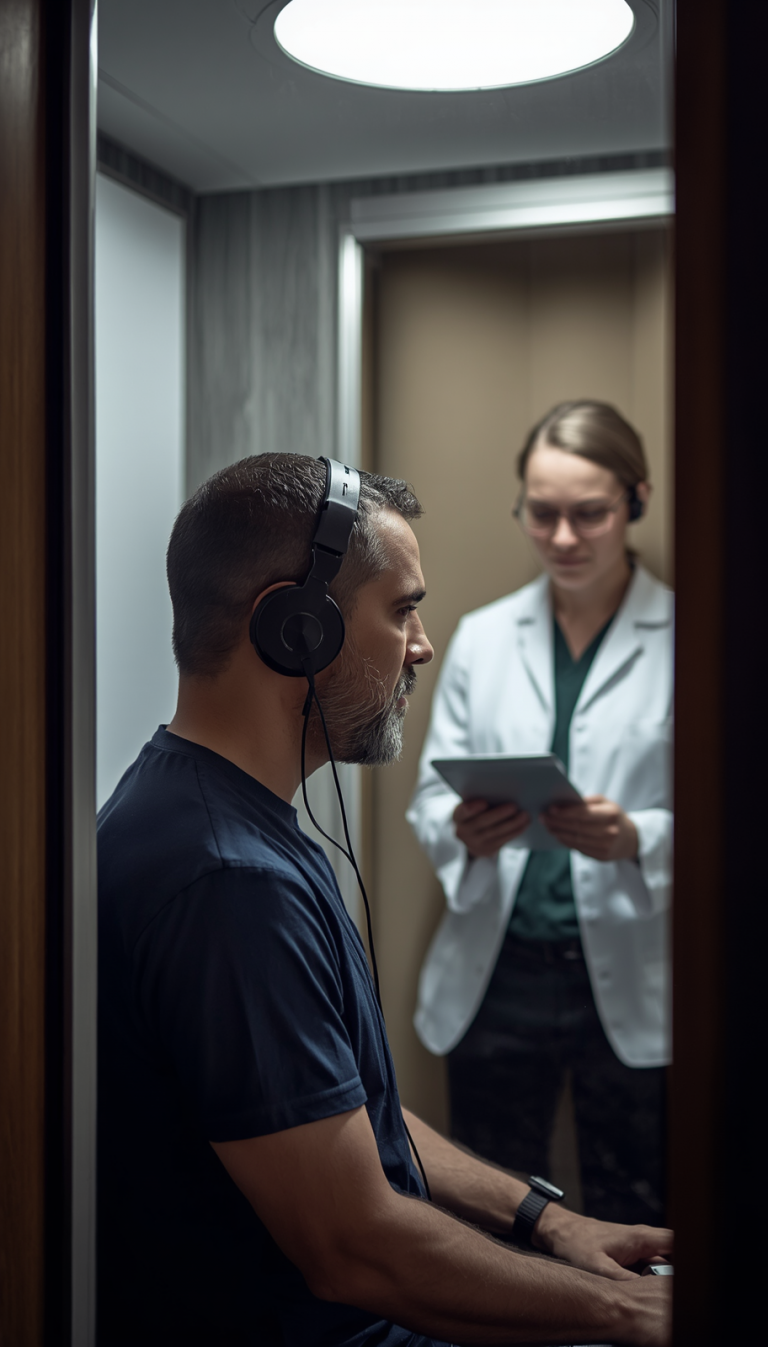
Hearing Screening: what you need to know
Audiogram, audiometry, tympanometry: everything about a hearing assessment.
Read the article →
Hyperacusis: understanding and treating
Do ordinary sounds hurt? Hyperacusis is treatable. Causes, link to tinnitus and solutions.
Read the article →
Advice and guidance
We support you at every step of your hearing journey, providing personalised advice and guiding you towards the solutions best suited to your situation and needs.

Free hearing screenings
Benefit from a free hearing screening carried out by a qualified audiologist to evaluate your hearing and receive personalised advice.

Free trial with no commitment
Test your hearing aids in your daily environment for several weeks to find the ones that suit your comfort, with no purchase obligation.

Hyperacusis
Hyperacusis is an increased sensitivity to everyday sounds that most people tolerate without difficulty. Ordinary noises — cutlery, traffic, voices — can become painful or overwhelming for those affected.
Hyperacusis can be associated with tinnitus and often has a significant impact on daily life, leading to social withdrawal or avoidance behaviours.
Hearing aids equipped with sound therapy programmes can help desensitise the auditory system and gradually restore tolerance to sound. A comprehensive hearing assessment is the essential first step to identifying the right approach.
With appropriate support, many patients experience a real improvement in their sound tolerance and quality of life.